

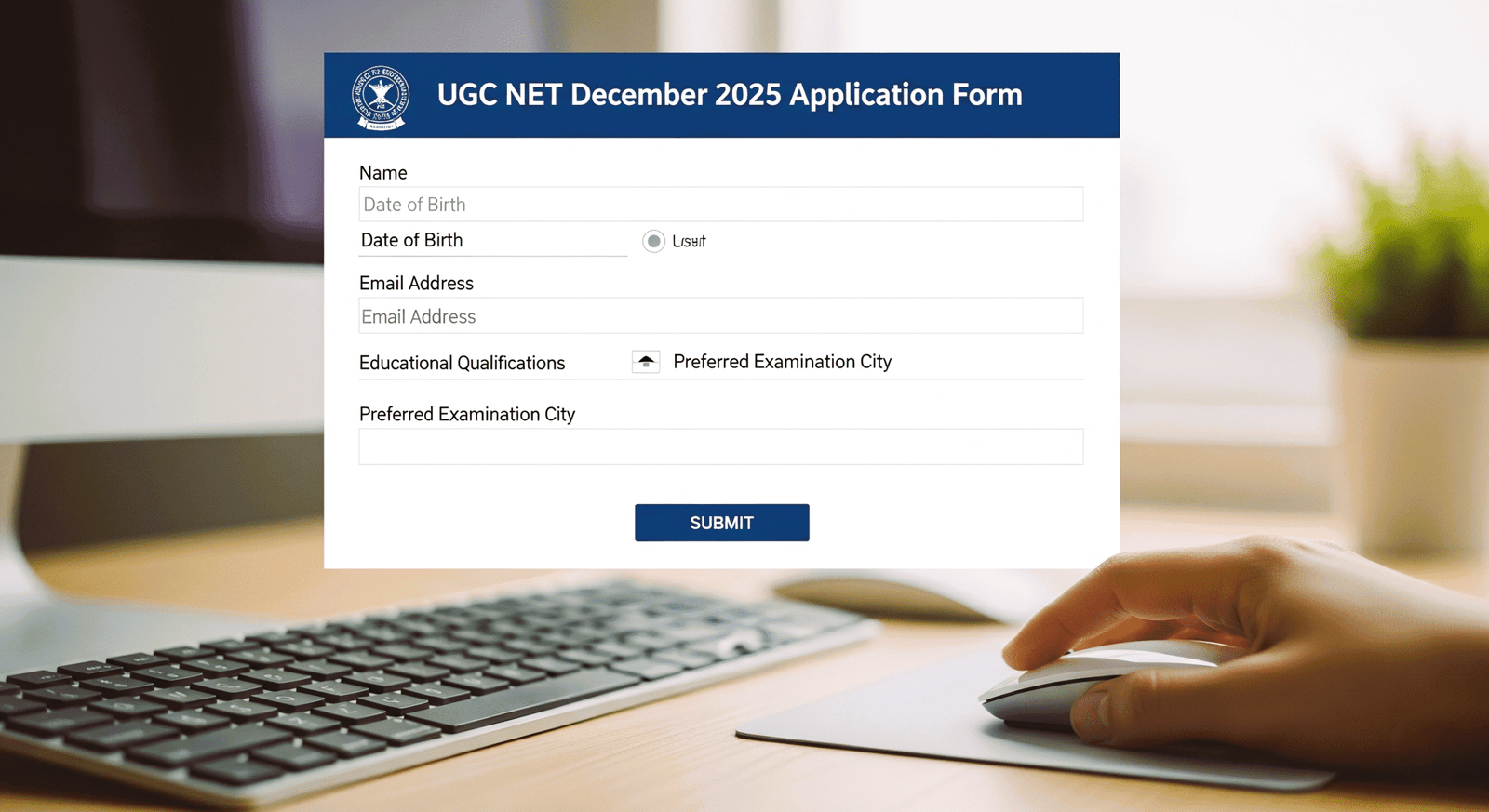
UGC NET Winter Cycle Announcement: Core Significance and Professional Pathways
Excellent updates for higher education aspirants across the nation. The official structural framework and registration guidelines for the upcoming winter session of the University Grants Commission National Eligibility Test (UGC NET) are being finalized. The National Testing Agency (NTA) formally initiated this cycle by releasing the detailed public notification on October 7. Following this release, qualified candidates can now seamlessly manage their entire registration and documentation process directly through the centralized web portal.
Why the UGC NET Remains a Critical Academic Milestone
This national-level evaluation serves as the definitive benchmark for establishing structural eligibility within higher education and research ecosystems. Passing this exam unlocks multiple critical professional pathways:
Assistant Professor Recruitment: It fulfills the mandatory minimum criteria required to apply for teaching faculties across universities and colleges nationwide.
Junior Research Fellowship (JRF): Achieving the upper-tier cut-off percentiles awards candidates a prestigious research fellowship, offering substantial financial grants to support advanced doctoral work.
Direct PhD Admissions: In line with updated educational directives, institutions now natively use UGC NET scores as a primary metric to grant direct admission into doctoral research programs, replacing multiple standalone institutional entrance exams.
For any postgraduates aiming to build a sustainable career in advanced research or university-level instruction, navigating this examination successfully is the most vital step forward.

UGC NET December Session: Official Timeline, Exam Blueprint, and Selection Criteria
The National Testing Agency (NTA) has released the complete structure and timeline for the University Grants Commission National Eligibility Test (UGC NET) December session. This national-level assessment remains the definitive benchmark for candidates aiming to qualify for Junior Research Fellowships (JRF), secure appointments as Assistant Professors, or gain direct admission into PhD programs across Indian universities.
Eligible candidates can manage their registrations and tracking through the official NTA web portal.
Official Examination Timeline
The registration windows, correction phases, and exam schedules have been finalized according to the formal notification framework:
Release of Official Notification: October 7
Online Application Window: October 7 to November 7 (Closes at 11:50 PM)
Form Correction Window: November 10 to November 12
Allotment of Examination City: Released 10 days prior to the start of examinations
Examination Dates: Conducted from December 31 to January 7 (Excluding the New Year holiday)
Daily Shift Timings:
Shift 1 (Morning): 9:00 AM to 12:00 PM
Shift 2 (Afternoon): 3:00 PM to 6:00 PM (Note: Only the morning shift operates on December 31)
Administrative Documents & Hall Tickets
Advance City Intimation: This digital slip is published exactly 10 days before the commencement of the testing cycle. It displays the specific urban center where the candidate’s exam venue is located, allowing for early travel arrangements.
Official Admit Card: Distributed progressively online roughly a week before the exam. This document functions as the mandatory entry pass and details the precise venue address, assigned shift, and security gate closing times.
UGC NET Examination Pattern
The assessment utilizes a unified, single-day layout executed entirely in Computer-Based Test (CBT) mode. Candidates must complete both papers within a continuous three-hour window without any scheduled intermission.
| Paper Type | Total Marks | Number of Questions | Core Evaluation Areas |
| Paper 1 (General) | 100 Marks | 50 Questions | Teaching Methodology, Research Aptitude, Logical Reasoning, Comprehension, and Data Interpretation |
| Paper 2 (Subject-Specific) | 200 Marks | 100 Questions | Advanced knowledge in the specialized discipline selected by the candidate (Chosen from 85 available subjects) |
| Unified Total | 300 Marks | 150 Questions |
Marking Protocols:
Every correct response adds +2 marks to the score.
The evaluation system features no negative marking for incorrect selections or blank answers.
The complete digital question booklet is available in both English and Hindi.
Step-by-Step Digital Application Process
Academic Eligibility & Age Restrictions
Minimum Academic Requirements:
Candidates must hold a Master’s Degree or an equivalent postgraduate qualification from a UGC-recognized institution.
General / Unreserved Categories: A minimum of 55% aggregate marks is mandatory.
Reserved Categories (OBC-NCL, SC, ST, PwD, Third Gender): A relaxed minimum threshold of 50% aggregate marks is required.
Age Thresholds:
Junior Research Fellowship (JRF): The maximum age limit is 31 years as of the specified cut-off date. Standard relaxations up to 5 years apply for SC, ST, PwD, Third Gender, women applicants, and candidates with verified research experience.
Assistant Professor & PhD Admissions: There is absolutely no upper age limit restriction.
Category-Wise Application Fees
The processing fee must be submitted online during the active registration window:
General / Unreserved: ₹1,150
General-EWS / OBC-NCL: ₹600
SC / ST / PwD / Third Gender: ₹325
Validity of Results and Certificates
Scorecards and official qualification certificates are issued online after the completion of the answer key challenge review phase.
Assistant Professor E-Certificate: Holds lifetime validity across all Indian universities and colleges.
JRF Award Letter: Remains valid for a strict period of 3 years from the date of result declaration. The fellowship must be activated by joining a recognized PhD research program within this timeframe.
Conclusion
The UGC NET serves as the premier national gateway for establishing a career in high-level research and academic instructing. Because the winter testing cycle stretches from the end of December into early January, maintaining a well-structured preparation strategy is key. Focusing on past question analysis, building conceptual clarity in Paper 1, and taking regular mock exams will significantly enhance your chances of hitting the required cut-off percentiles for JRF or Assistant Professor eligibility.


